Feiran Wang
Hi, I'm Feiran, a third-year PhD student at the University of Illinois Chicago under the supervision of Professor Yan Yan. In Summer 2026, I was a research intern at the Bosch Center for Artificial Intelligence (BCAI), mentored by Dr. Xiaoqi Wang.
My research centers on Spatial Intelligence, with the goal of empowering robots and other embodied agents with the spatial understanding, physical reasoning, and interactive capabilities needed to operate effectively in the real world. My research spans 3D foundation model, world model, medical imaging, self-evolving agents and Physical AI.
I hold an M.S. from the University of Illinois Urbana-Champaign, where I was advised by Professor David Forsyth, and a B.S. from Shanghai University advised by Professor Xiaoqiang Li. Before joining UIC, I spent two years at the Illinois Institute of Technology. I also made academic visits to the University of Michigan and the University of Toronto.
🔥 News
- 2026.10 My first-author work on predictive spatial reasoning in VLMs, From Sight to Foresight, is now available.
- 2026.10 My first-author work on controllable future video generation, Kepler4D, is now available.
- 2026.10 Our research on vision-language-action models with future 3D prediction, ForeAct3D, is now available.
- 2026.08 Continued the Ph.D. journey at the University of Illinois Chicago with my advisor, Prof. Yan Yan!
- 2026.07 Attended Y Combinator's Summer Startup School in San Francisco.
- 2026.05 My first-author paper, RayMap3R, was accepted to ECCV 2026 🎉
- 2026.05 Our lab was awarded Jetstream2 NAIRR computing resources.
- 2026.03 I was thrilled to join the Bosch Center for Artificial Intelligence (BCAI) as a research intern for the summer!
- 2026.02 Our paper, CIF, was accepted to CVPR 2026 🎉
- 2026.01 My first-author paper, CogniMap3D, was accepted to ICLR 2026 🎉
- 2026.01 I started a visiting scholar position at the University of Michigan, Ann Arbor.
- 2026.01 Our research on long-term memory reconstruction, CogniMap3D, became available on arXiv.
- 2025.09 My first-author paper, X-Field, was accepted to NeurIPS 2025 as a Spotlight paper (top 3%) 🎉
- 2025.03 Our work on 3D medical image generation, ZECO, was accepted to MVA 2025 as an oral presentation 🎉
Work Experience

Predictive spatial reasoning in vision-language models, from driving to everyday scenes. Developed SpatialMind to understand scene dynamics and anticipate future spatial states.

Robotic manipulation through simulation, motion planning, and control. Developed a sim-to-real workflow for rapid prototyping and validated grasping on low-cost robotic hardware.
Publication
*=Equal contribution | ‡=Author mentored by me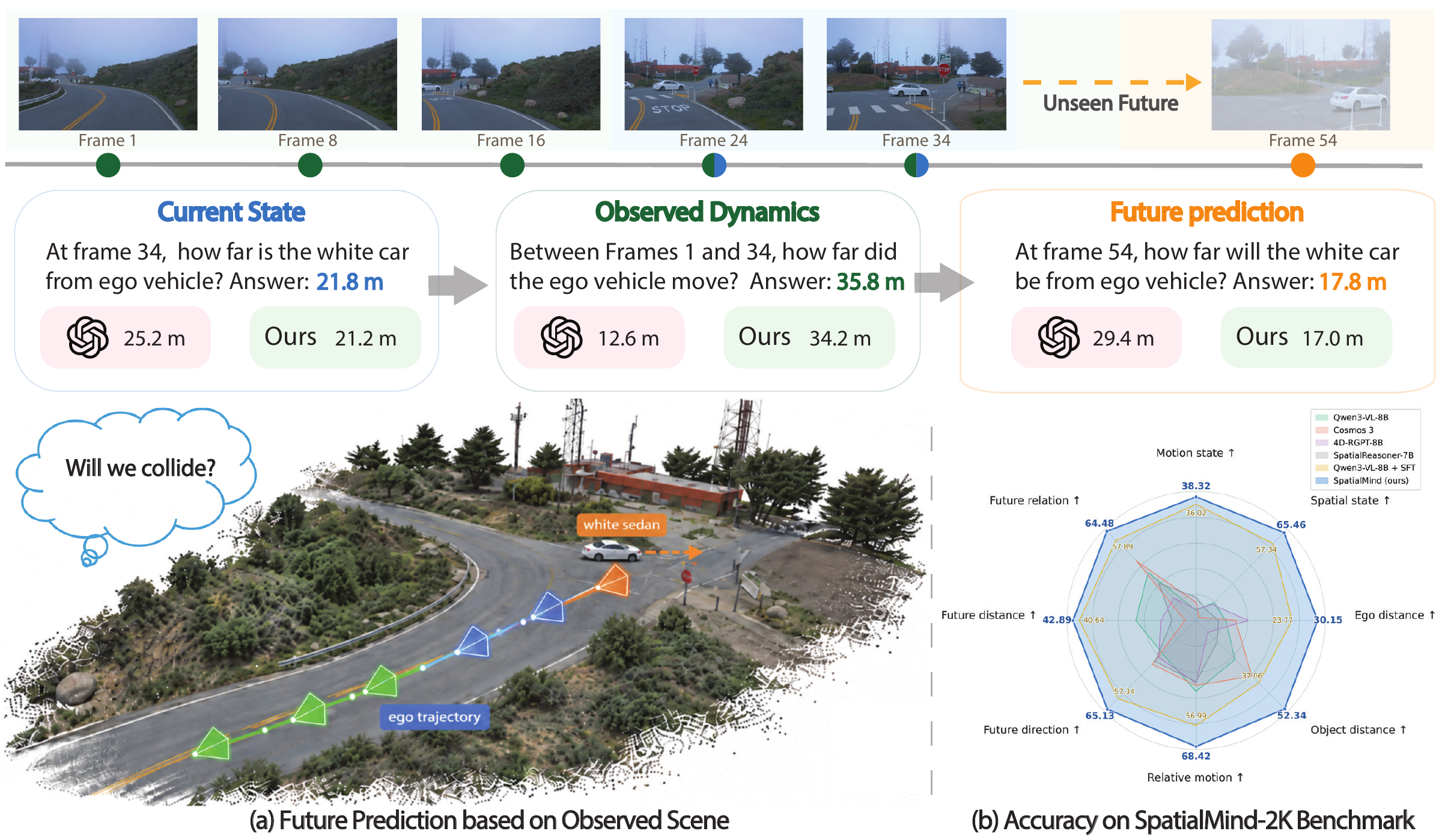
We present SpatialMind, a vision-language model that combines metric geometry and progressive state-chain reasoning to understand observed spatial dynamics and predict future spatial states.
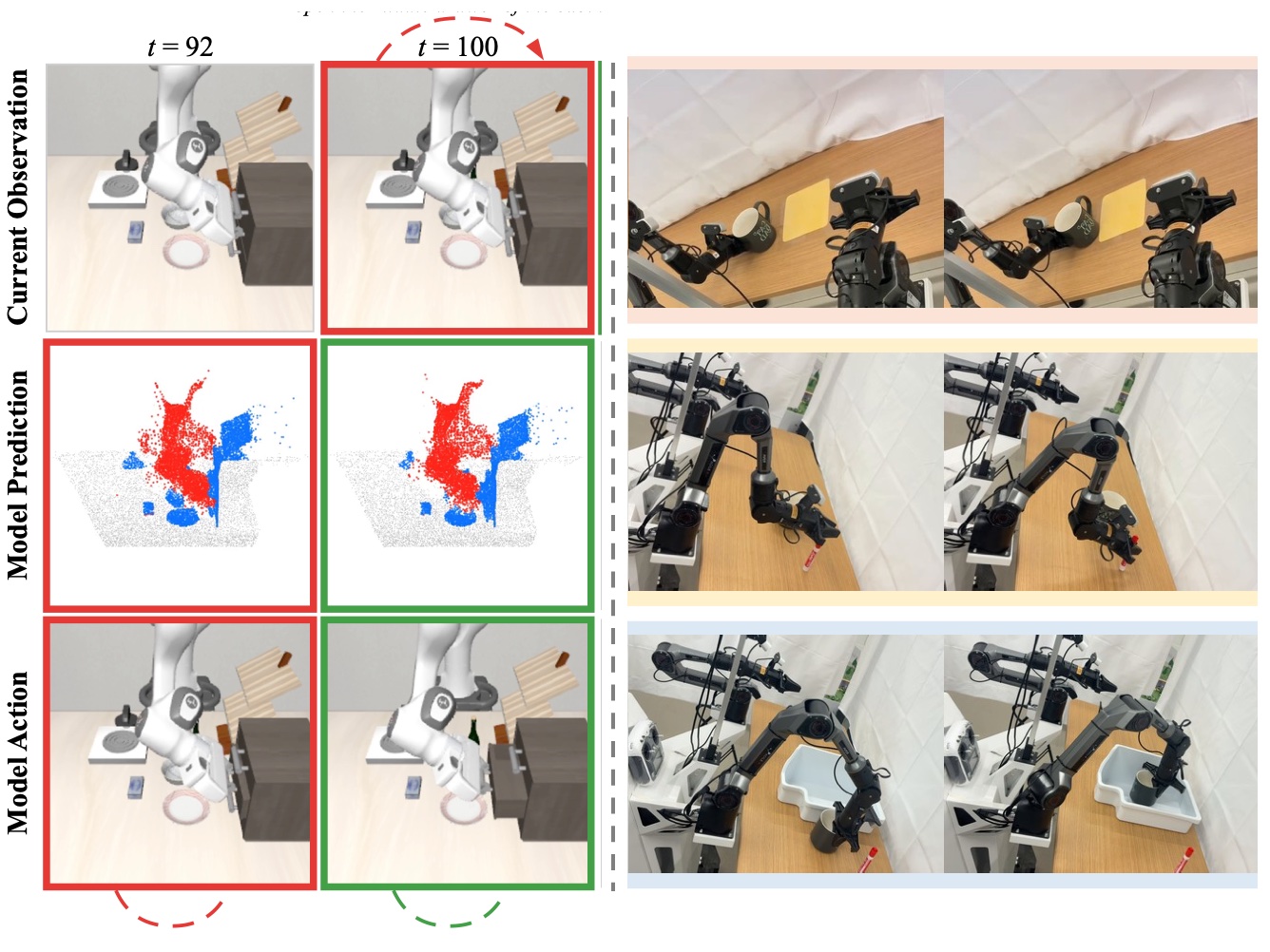
ForeAct3D grounds future semantic 3D scene prediction in policy-generated actions and physical consistency to improve VLA policies without requiring future prediction at inference.
SFAN combines long-horizon future predictions for task guidance with short-horizon residual corrections for precise local control, improving robot manipulation across simulated and real-world tasks.
We revisit and observe that RayMap-based predictions exhibit inherent static scene bias and propose RayMap3R, a training-free streaming framework for dynamic scene reconstruction.
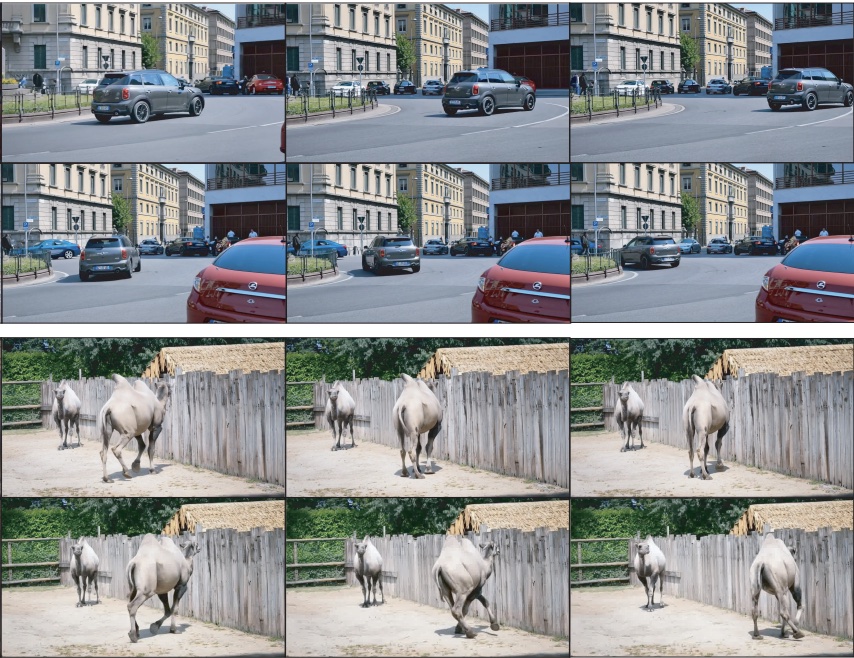
Kepler4D uses an explicit 4D proxy state and editable object trajectories to guide future video generation, supporting controllable motion and novel viewpoints.
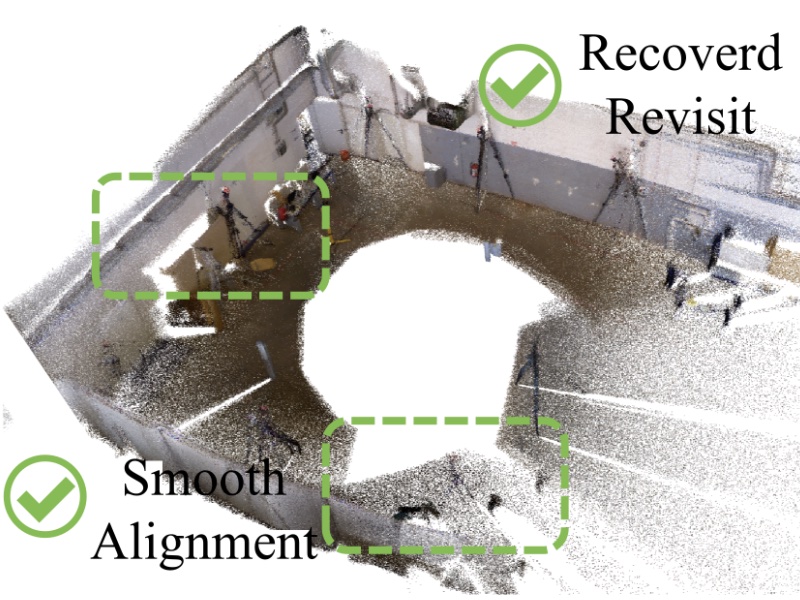
We present LIST3R, an instance-aware framework for long-sequence 3D reconstruction inspired by the way humans organize spatial memory around stable and recognizable objects.
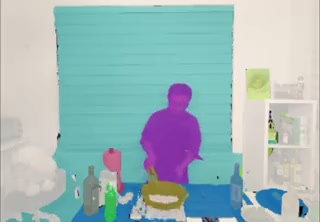
CIF formulates a continuous probabilistic field over object existence and identity in space-time, enabling consistent instance representations across views for dynamic scene understanding.
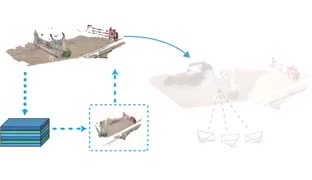
We present CogniMap3D, a bioinspired framework that maintains a persistent memory bank of static scenes, enabling efficient spatial knowledge storage and rapid retrieval.
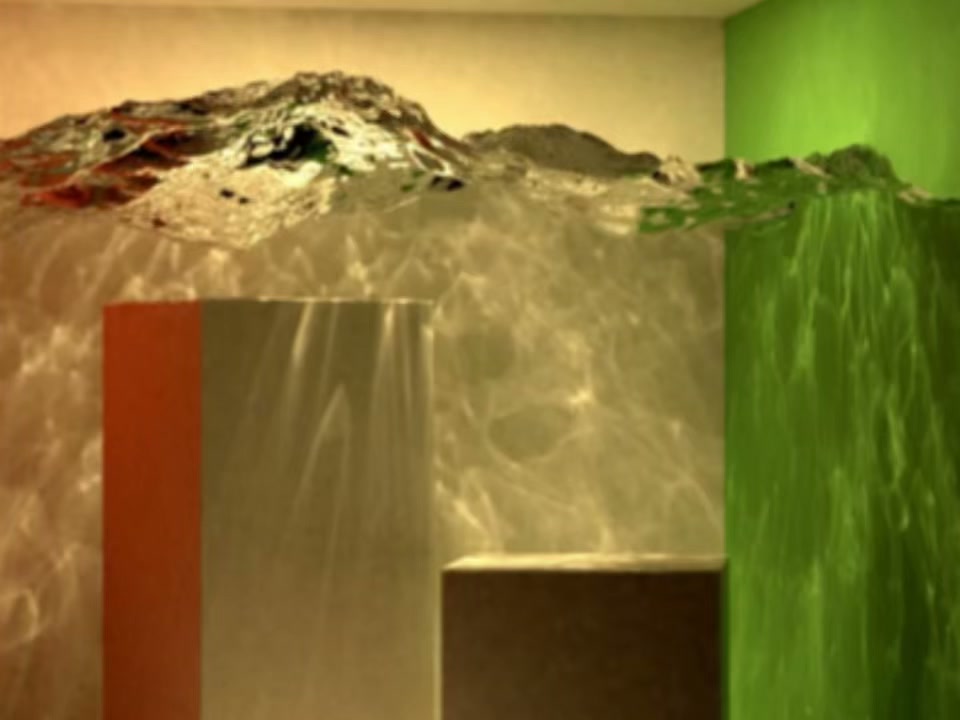
GPF reformulates photon mapping as a continuous radiance field of 3D Gaussian primitives, achieving photon-level accuracy for global illumination with greatly reduced computation.
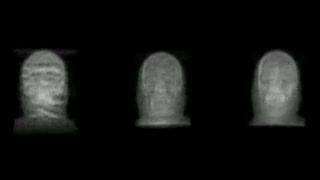
Rooted in the X-ray imaging process, X-Field presents a representation specifically for high-quality X-ray Novel View Synthesis and CT Reconstruction.
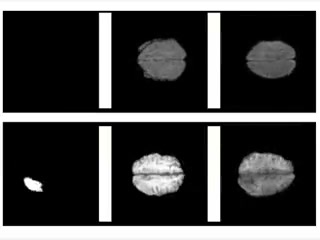
To mitigate medical data scarcity, ZECO synthesizes high-quality 3D MRI images across various modalities, conditioned on segmentation masks.
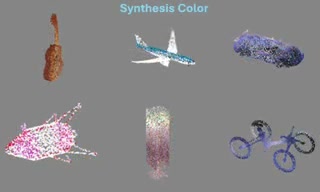
Point clouds captured by LiDAR are often colorless; PCCN-RE enables high-quality colorization with a relevance embedding module built on a Conditional GAN.
Scientific Project
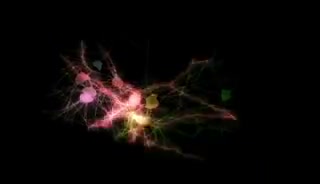
Understanding morphology and distribution of neurons remains a significant challenge in modern neuroscience. We aim to develop a unified framework for sparse-to-dense neural generation and unsupervised segmentation, providing deeper insights into neural activity and connectivity.
Article
An analysis of why 3D scenes may become the next major communication modality, examining the technological convergence and infrastructure developments that suggest we're approaching a transformative inflection point.
Research Mentorship
- Zhe Tao · UIUC, M.S., currently UIC, RA · ForeAct3D (co-author) (Feb 2026 - present)
- Vickie Chen · Rensselaer Polytechnic Institute, B.S. currently UIC, RA · SEVA (co-author) (Feb 2026 - present)
- Jing Gao · Beijing Jiaotong University, B.S. to Ph.D. · LIST3R (co-author) (Sep 2025 - July 2026)
- Zezhou Shang · UPenn, M.S. to UMichigan, Research Associate · RayMap3R (co-author) (Sep 2025 - Apr 2026)
- Rishi Madhavaram · UIC, M.S. to Dell · Medical Image Segmentation (Sep 2025 - Feb 2026)
Academic Activities
- Conference Reviewer: NeurIPS '26, ECCV '26, CVPR '26, ICLR '26, ICMR '26 '25, ICCV '25, MVA '25
- Journal Reviewer: Computer Vision and Image Understanding, Computers & Graphics
-
Scholarship: Cyrus Tang Scholarship
(Jan 2024 - Dec 2025)
Recognized for advancing medical imaging research and contributions to the healthcare community.